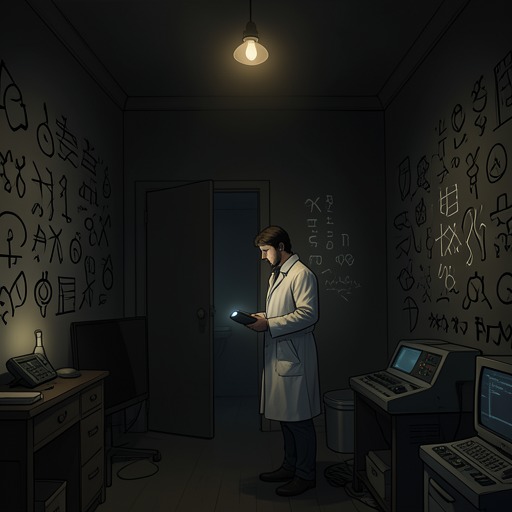
The atom is everywhere—in the bread, in the salt
Voices from ChernobylThe atom is everywhere—in the bread, in the salt is the expression of a nuclear danger that cannot be kept at a distance. It overturns the logic of shelter: radiation is not merely an external force to hide from, but something encountered through eating, breathing, and the ordinary materials of life. The speaker’s question is not only how to survive contamination, but how to understand a world in which its boundary has disappeared.
From Shelter to Everyday Life
The passage begins with preparation for nuclear war and the building of shelters. The intended comparison is to shrapnel: people wanted to hide from the atom as they would from fragments of an explosion. But the sentence breaks that analogy open. “But the atom is everywhere. In the bread, in the salt.” The familiar foods make the threat intimate and inescapable; a shelter offers no simple separation from what has entered the conditions of daily existence.
The speaker makes that change bodily: “We breathe radiation, we eat it.” The words move from the general image of the atom to the acts that sustain life. Food and breath are no longer secure opposites to danger. The passage contrasts this with a kind of deprivation the speaker can imagine—having no bread or salt, even boiling a leather belt for its smell—before confronting the harder-to-comprehend possibility that everything is poisoned. The question “Then how can we live?” follows from that reversal: survival itself has become difficult to conceive.
Fear, Responsibility, and the Search for Understanding
The expression belongs to an account of the first months after the reactor disaster, when fear spread and doctors, teachers, and other members of the intelligentsia left. The speaker contrasts their departure with military discipline and the fact that people were not being allowed to leave unless they gave up their Party cards. The question of how to live therefore leads directly to the question of responsibility: whether blame belongs to scientists, station personnel, the director, or operators on duty.
Yet the passage resists turning knowledge itself into a crime. It asks why people do not treat automobiles as embodiments of human thought in the same way they turn against the reactor, and rejects both the demand to close every atomic station and the call to imprison nuclear scientists as a sufficient answer. “Knowledge, knowledge by itself, can’t be criminal.” Scientists, too, are described as victims of Chernobyl. The closing desire—to live after Chernobyl rather than die after it, and to understand—does not undo the image of universal contamination. It gives that image an unresolved purpose: understanding is presented as necessary to life, even when danger can no longer be placed safely outside it.